Digging a Ditch

Iowa is kinda flat and, well, when it gets windy, snow drifts tend to happen.  Our landlord, Phil, warned us that one of the roads heading up to our place tends to be pretty bad when snow is blowing around.  As the title to this post suggests, he wasn’t wrong.

Meg and I were heading back from daycare this afternoon and turned onto Gable Ave toward home.  The northbound side of Gable was a touch more covered by snow than it was this morning when I was heading south.  By “a touch,” I mean a steady gradient of a few inches into a few feet as you got to the ditch.As such, the southbound side of Gable was just fine – the northbound, not so much.  Anyway, I was going faster than I should have (like…25-30 mph total, Mom…), and too close to the northbound side of the road, causing the car to slide into the embankment after the right wheel hit a deep spot.  We were fine, of course, and close enough to home that Brooke could come by with her car to transfer Meg into a vehicle that was…mobile.

Brooke brought a shovel along.  Sadly didn’t help much.  That car wasn’t moving.  We were ready to call the tow truck.

Thankfully, we live in rural Iowa, where almost everyone has a 4×4 truck.  Two very nice gentlemen, Jeremy and Josh, drove up in their 1/2 ton Chevy truck, attached some cabling between their truck and the frame of the Sportage, I put ‘er in reverse, and they pulled me out right quick.  A large Dodge Ram pulled up after them.  People were lining up to pull a car out of the ditch!

Regardless, it was a brief yet interesting experience.  I complain occasionally about living in the middle of nowhere, but sometimes, you’re glad that’s where you are.  Thanks to Jeremy and Josh and their Silverado.  🙂

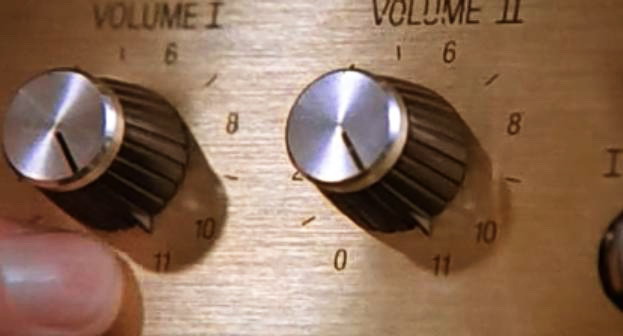
Turning It Up To ’11

There were various blog and Facebook posts bouncing around over the past few weeks discussing the year that was 2010 and the potential for 2011. I decided to spend those first few days not really posting much, mostly out of laziness, but also out of reflection.

2010 is going to go down as a seminal year for me, personally, as well as our family as a whole.  It was a year when I defended my dissertation, culminating in the completion of a Ph.D. and, therefore, the end of my tenure as a student (23 years in the making…).  It was a year marked by leaving the bustling city of St. Louis for the more laid-back trappings of rural Iowa, coinciding with both Brooke and I leaving our previous jobs (if you count being a graduate student as a “job”…) and starting new positions in Cedar Rapids and Iowa City, respectively.  There was also a 10 year high school reunion in there.

The move to Iowa brought quite a few other changes.  We now live in a house, not an apartment.  I now have to (get to?) mow a lawn.  Brooke gets the garden she’s always wanted.  I have a longer commute, plus a bus ride, in getting to work.  We had to find a new church and have become more involved that we planned to (but this is how it always goes…).  We had to come to terms with the fact that it’s pretty hard to go out to eat once a week when you can’t just walk to Joanie’s for happy hour after work.  And we live on a gravel road now.  Oh, and it’s a lot colder in Iowa – nice in the summer, crazy in the winter.

Brooke and I celebrated our 5 year anniversary in 2010.  In many ways, we interact just like we did back when we were first married, if not as we did before.  Of course, the obvious big change in that area is the fact that we added a new member to the family, Meg, who was with us (outside of her mother, at least…) for nearly 10 months in 2010.  It’s been a wild ride learning to be a parent (still learning…), but we’re both getting better at it and slowly figuring out how to handle the problems that go with it.

So, when I say that 2010 was a “seminal year,” it’s because of all these things.  Lots of big change that will influence the course of our collective life that we’ll be able to look back on with fondness in a few short years.

What’s in store for 2011, you ask?  Who knows.  Seems hard to top the year that was 2010 when you look at that list.  I’d be just fine scaling the big things down for a bit so we can coast and enjoy the changes we just went through for a bit longer.  I don’t really see much coming over the horizon except for settling down a bit further, and that’s just fine with me.  A few things off the top of my head would be that I’ll find out if my grant gets funded, which will determine how long we’re staying in Iowa; we’ll try a family vacation with a 1+ year old; Brooke will almost triple the size of her garden and get some chickens; and I will brew close to 60 gallons of beer.

Sounds like a good start.  🙂

T.M.I.

I have been slowly catching up on podcasts from late last year now that I’m back at work.  I was listening to one yesterday from NPR’s On Point discussing the Wikileaks scandal, but moreover, the world that we now inhabit with regards to leaks, the internet, and overall availability of information.

Toward the end of the segment, the host, Tom Ashbrook, was talking to the former Director of Intelligence, John Negroponte.  He asked Negroponte how we, the United States, would/could deal with a leak like this.  Negroponte answered that they would do their best to prevent it from happening in the first place, placing greater restrictions on the individuals that can access certain information, and then also help re-classify information that should be classified versus that which really doesn’t need to be.  Ashbrook kept pressing him on the matter, asking: “What would you do in the event of a leak?  How would you stop it?”  Negroponte kept going back to “stop it at the source.”  It was getting really annoying to keep hearing the same question over and over, when I kept repeating the answer in my head as often as Ashbrook could ask.

The correct answer?

You do nothing.

There is nothing you can do.  Once the Internet has your information, you’re done.  It’s out there and you can’t stop it.  You can shut down a server or two, but the information propagates to such a degree that you can never fully eradicate any of it.

As happens frequently, this exchange got me thinking about generational differences and their views on the Internet as a whole, specifically to what degree each generation seems to embrace the sharing of information.  [Note: I have talked about this before…]  For those of us that grew up in parallel with the Internet (i.e. it was growing as we were growing), I think the transition was easy.  We learned to live together, gradually sharing some bits of information and withholding others.  We were using the Internet before Google even existed, when all you could do is use Yahoo! to find a website that you had to manually file within their database.  There was no Facebook.  There was no YouTube.  Primarily we were takers of information rather than providers, at least until we became more comfortable contributing to this new ecosystem.

The generation(s) older than me have taken to the Internet at a slower pace (at least in terms of creating new information…), largely because they’re more cautious.  Quite a few folks from those generations are now using e-mail and Facebook, and consequently are now starting to rely on it to a greater degree than ever before.  You can still see the delay in overall adoption in things like smart phones though, where these people are just now starting to get into the mode where they think complete and total connectivity is a necessity.  This is likely because their children and grandchildren are also more accessible, so if they want to contact them, this is how they have to do it.

It’s the younger generation(s) that I’m more curious about.  These people are growing up in a world where the Internet “just exists,” much like air and gravity.  It’s a reality.  It’s something you live with and use.  I guess the difference goes back to information sharing, the older generation never really shared things and stayed more private, my generation gradually let certain things slip and get onto the Internet, and the younger generation never really learned the restraint that should be applied to certain things rather than others.  However, I imagine that these kids are much more attuned into “what should go on the Internet” and “what should not go on the Internet” than I give them credit for.  They’ve seen things happen to their friends when something gets posted that shouldn’t, likely causing them to think twice about their choices.

Personally, I’ve always held the view that whatever I post on the Internet is viewable by The World At Large.  Anything I post on Facebook (and there are quite a few politics-based links I post up there…my views are pretty clear…) can be seen by practically anyone.  Anything on this blog can be seen by absolutely anyone.  Any future job prospects that I have will likely go a quick Google search on my name and this blog will be the first thing that comes up.  They can go back almost 6 years and read all about me, my family and what I’ve been up to.  Am I proud of all of it?  Not necessarily, but I also don’t hide from it.  That information is representative of who I was and who I am today.  If you want a snapshot of Andy Linsenbardt and all he’s about, this is where to find it.  Freely available and open for all to see.

This is also how I view information in general.  Sure, we have an inclination to hide things, but more often than not, we’re trying to hide things that we’re embarrassed about.  I plan on teaching Meg and her siblings someday that the Internet is a very useful tool, but anything you post on it can be viewed at any time.  If you don’t want anyone to see a certain picture of you drinking while you’re underage, don’t put it online.  Someone will find it.  Even if you delete it, it’s saved on a server somewhere that someone can get.  Anything that could potentially embarrass you should stay far away from the Internet.  Really, though, you just shouldn’t actually do things that could potentially embarrass you someday, but that’s another matter…

No matter what generation you come from, “honesty is the best policy” still applies to you.  Everyone is entitled to secrets, but there are some things that may as well be out in the open, freely accessible, so that others know more about how and how to deal with you.  It ends up saving time in the “getting to know you” stage.  You think about better strategies when dealing with others when you know more about them.  Sure, you learn how to take advantage of them as well, but hopefully this kind of openness spreads the naivety pretty thin.

Which brings us back to the Wikileaks deal from last year.  A lot of people were concerned that this information could hurt America’s standing in the world, and hurt our relationships with other nations.  Information that the United States was hiding was perceived as something to be embarrassed about, even if, at first glance, that information was innocuous.  In the end, the complaint that this leak somehow disrupted the fabric of space-time and all is lost is moot: if you really didn’t want that information out, then you should have classified it differently.

However, the larger point is this: perhaps most of that information should have been out in the open anyway.  Much as reading this blog gives the reader some extra insight into me, perhaps a lot of that information provides extra insight into the world we inhabit and the cultures we interact with.

And I don’t see a problem with that.

Cedar Rapids: The Movie

I happened to check the Apple Quick Time movie trailers page, as I sometimes do when I want to kill time at work (amongst other things…), and I found this little movie coming out February 11th that I had never heard of. Cedar Rapids stars Ed Helms (The Daily Show, The Office) as a small town insurance agent that has never been “to the big city” until he’s sent as his company’s representative to an insurance convention in the bustling metropolis of Cedar Rapids, IA.  The movie also stars Sigourney Weaver, John C. Reilly, Anne Heche, and other notables.

To be quite honest, the movie itself doesn’t even look all that funny and may even be a bit cliche, but I’m quite curious as to whether any of it was actually filmed on location in Cedar Rapids, which is a whopping 10 minutes from our house.

Anyway, I just didn’t know this movie existed.  We may need one of Meg’s Grandmas to come up and babysit for a nice in mid-February.  🙂

Next On Tap

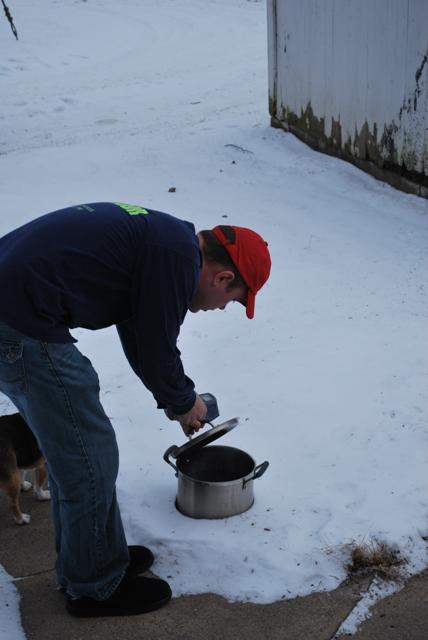
Well, the decision’s been made: we will brew not one, but two beers for our next batch.  The first one will be a Bavarian Hefeweizen, thanks to my parents that got the kit for me for Christmas.  This particular beer is a “wheat beer,” so if you’ve ever had a Boulevard Wheat or a Blue Moon, you generally know what it will be like.  The flavor will probably be more like a traditional German wheat beer however, so it likely won’t have the “fruity” nature of the aforementioned beer examples, but the texture, consistency, etc. will be very similar.

Secondly, I just ordered an India Pale Ale (IPA) kit.  This one will be quite a bit “hoppier,” which is the bitter flavor you get.  If you’ve ever had a Pale Ale, this one will be even more bitter.  Over the years, mostly due to the influence of Schlafly’s Pale Ale, I’ve grown to enjoy hoppy beers more than others, so I’m rather excited to try my hand at an IPA.  It gets the name because hops helped prevent the beer from spoiling they were shipped from England to India back in the 18th century (although that claim is disputed), so they would add a ridiculous amount of hops to them to preserve the beer for the long trip.  Apparently, that style of beer was also well-regarded amongst the people of India, increasing its popularity abroad.

We’ll brew both of these over the long MLK weekend.  Thanks to my Dad, I’ve got a few glass carboys I can use for extra brewing volume, allowing me to ferment multiple beers at a time.  The Hefeweizen should take 6 weeks, but if it goes anything like the Honey Brown Ale we brewed earlier, it’ll probably be ready before then.  The IPA, on the other hand, could take 2 months.  It’s a beer that needs a Secondary Fermentation, meaning that we will transfer from the Primary Fermenter into a Secondary vessel to allow the beer to age for upwards of a month before we bottle it.  This is where it’s nice having multiple fermentation vessels available, so that while one beer is “coming off the line” into bottling, the other one can continue aging and be ready for bottling by the time I’ve got more bottles available to put it in!

The timing will be interesting, as the IPA can handle 62 F temperatures, while the Hefeweizen prefers slightly warmer temperatures in the mid- to high-60s F.  The basement of our house is running in the mid- to upper-50s F, so once fermentation begins (i.e. bubbles start appearing in the air lock, due to yeast generating carbon dioxide), I’ll move the vessels downstairs where they can continue on their merry way.  However, as the temperature is cooler downstairs, the yeast will probably act a touch slower than we would otherwise prefer.  Therefore, it could take longer to complete…but, the Honey Brown was done ahead of time, so the temperature downstairs didn’t seem to matter all that much.  We’ll just have to see!

Regardless, I’m excited to try a few more beer varieties.  Assuming we get it all done between January 14 – 17, we should expect that the Hefeweizen will be done and drinkable toward the end of February and the IPA will be ready by mid-March.

This is the general plan for brewing, methinks.  We’ll generally try to have one “long-term” beer fermenting, and then supplement with a “short-term” beer in between.  Kinda depends on how many bottles we’ve got lying around for them.  The Honey Brown aged very well over time and has definitely improved since bottling, so we’ll do our best to leave some bottles downstairs aging at all times, including some of the Honey Brown to see how it does months after completion.

Hooray, beer!

Primer: Drug Metabolism

These posts, tagged “Primer,” are posted for two reasons: 1). to help me get better at teaching non-scientists about science-related topics; and 2). to help non-scientists learn more about things they otherwise would not. So, while I realize most people won’t read these, I’m going to write them anyway, partially for my own benefit, but mostly for yours.

I chose to work on this subject for December because I may end up teaching a lecture or two on metabolism in early February to pharmacy students.  Obviously I’ll go more in-depth with them, but that isn’t the purpose of these Primers: they are intended as introductions.

Merriam-Webster defines “metabolism” as such:

Metabolism –noun

a.  …the chemical changes in living cells by which energy is provided for vital processes and activities and new material is assimilated

b. the sum of the processes by which a particular substance is handled in the living body

This definition is all well and good, but we’re talking about a specific form of “metabolism” here, one that really is talking about the breakdown of a chemical compound not necessarily for the purpose of generating energy.

Wikipedia provides us with a separate definition for drug metabolism:

Drug metabolism is the biochemical modification of pharmaceutical substances by living organisms, usually through specialized enzymatic systems.

So when we’re talking about an individual, such as an athlete, that has a “strong metabolism,” we’re talking about related but separate processes from the ones typically involved in modification and removal of drugs from your system.

In general, drug metabolism consists of two separate processes known as Phases.  In Phase I metabolism, a given compound is broken down and typically inactivated (but not always, as we’ll see shortly).  It usually involves a specialized protein called an enzyme that removes a specific portion of the compound, rendering it pharmacologically inactive.  Phase II metabolism typically involves the addition of another molecule onto the drug in question, something we call a “conjugation reaction.”  This process serves to also increase the polarity of a given drug.  Usually, we think that Phase I reactions precede Phase II reactions, but not always.

When I say “polar,” I mean it in a sense similar to a planet, in that a planet has “poles” (e.g. north and south).  For the sake of simplification, you can also think of a magnet or a battery instead, with a “positive” pole and a “negative” pole.  In this fashion, chemicals also have a positive and negative charge, including chemicals like water:

In this case, the oxygen atom in water (i.e. H2O) is negative while the two hydrogen atoms are positive.  Therefore, water is polar: it has an end that is more positive and an end that is more negative.  Polar compounds are also considered “hydrophilic” (i.e. “water-loving”), mostly because these polar chemicals tend to dissolve readily in water.

There are examples of “hydrophobic” (i.e. water-fearing) chemicals as well, also known as non-polar.  You know how oil and water don’t mix?  That’s because oils like fats or lipids are hydrophobic and non-polar, made up of molecules that look kinda like these.

These are all examples of hydrophobic (non-polar) compounds, those that do not mix well with hydrophilic (polar) molecules like water.

The key to drug metabolism is to realize that most of your cells, and thus organs, are made up of lipids such as these, so if you have a drug that is particularly “lipophilic” (and thus, hydrophobic), then the drug is more likely to hang around in your body.  That is to say, a drug that is non-polar can hang around longer, affecting you for longer than you may otherwise want.  If you use a more polar drug (i.e. hydrophilic), it’s more likely to get passed out of your body much faster.  Much of your body’s ability to expel chemicals and metabolites depends on the ability of your kidney and liver to get those chemicals and metabolites into a form that works well with water, as water is what you typically get rid of (i.e. urine).

When your body recognizes a foreign compound, such as a drug, it wants to make that drug more polar so it can excrete it.  Thus, your liver contains a number of enzymes that do their best to make those foreign compounds more polar so you can get rid of it.

This process, obviously, impacts the ability of a drug to take action, which is why this process is important.  There’s a reason why drugs are introduced to your body orally (i.e. through the stomach/intestines), or intramuscularly, or intravenously.  If you were to take a drug orally, then it is subjected to what is termed as First-Pass Metabolism.  Typically, when you eat something, the nutrients from whatever you ate are taken up through the portal system and hit your liver before they hit your heart, which only then go on to the rest of your body.  Therefore, if you take Tylenol for a headache in a pill form, it some of it will be broken down in the liver before the heart gets it, and then it gets pumped to your brain to help with your headache.

Alternatively, you could take Tylenol intravenously, which bypasses the liver and thus gives you a full dose.  However, Tylenol is toxic in high doses, so you would never want to inject much of it (or any of it…there are better choices if that’s what you’re considering….) for fear that it could kill you.

The final concept to consider, aside from drug modification, polarity and first-pass metabolism, is how we could use this system to our advantage.  There are times when you take a drug, such as a benzodiazepine like valium (diazepam).  Valium, on its own, is very useful as a depressant, used to treat things from mania to seizures, however the act of drug metabolism produces metabolites that are also active (called, not surprisingly, active metabolites).  In the case of valium, it is broken down in the liver to nordiazepam, then temazepam and finally oxazepam.  Each one of these metabolites is active to some extent, which means that a single dose of valium will last for quite awhile as it’s broken down into other compounds that still affect you.

Sometimes, you can administer a non-active drug that then becomes active once it’s modified in your liver.  We call this a prodrug.  Codeine, for example, is modified by Phase I metabolism to its active form, morphine.  You typically administer morphine to someone intravenously, as it’s rapidly metabolized in the liver.  Codeine allows you to take advantage of your liver to give you morphine in a pill form, which you otherwise wouldn’t be able to do (as it would be broken down too far before it even hit your heart).

In short, drug metabolism is an extremely important process to consider when designing a drug.  You need to take ease of use and route of administration into account, you need to consider whether a drug has active metabolites or not, and you need to be aware of how hydrophilic/hydrophobic a drug is if you want it to remain in your body for any reasonable amount of time.

A Change of Pace

I participated in our church’s cantata this past weekend.  I was asked awhile back to play along in some capacity, whether it was guitar or percussion, and I opted for the latter after finally listening to the recording on the way back from Thanksgiving.  I’m particularly glad for this because the guy that ended up playing guitar had to deal with songs in terrible keys – drums don’t tend to play chords, so I was all good.  The choir held practices on Wednesdays in December, which were difficult for me to attend due to Brooke’s ever changing work schedule and the need to keep Meg on some semblance of a sleep schedule.  Therefore, I went this past Wednesday, practiced with the group this past Saturday, and then performed the cantata on Sunday.  When we actually performed the thing Sunday morning, I still hadn’t actually played the first two songs.  Par for the course.

Regardless, it turned out surprisingly well.  I used my djembe, congas and bongos, which fit pretty well with the piano lead, and guitar and synthesizer accompaniment.  I fit into the background, but still added to the experience in my own way.  I also got quite a few compliments following the two services we performed it in.  Overall, the choir did a great job and the music was very well received.

The whole thing brought up some memories, though.  For the last 10 years or so, my musical experience has centered around praise bands.  This would involve your typical “rock band”-style musical system, with a few vocalists, electric/acoustic guitars, bass guitar, maybe a piano and some drums.  There would be a leader, but that leader would also be playing an instrument, so for the most part, the band would be a, theoretically, cohesive group that didn’t really need a prototypical director to run it.  Many times, it became an “organic” experience and evolved as we performed each song.

This group at the cantata, however, needed a prototypical director.  And it’s been awhile since I’ve needed to follow one.

Generally, I was trying to follow the piano player, as she was the lead instrumentalist, but she was trying to follow the director, who was mostly directing the choir.  The piano, however, wasn’t really oriented toward the director, so while the piano player was keeping time as best she could, she couldn’t easily look over and see what the director was doing.  And the director was doing her best to fight timing between the piano and the choir, with all their individual singing and speaking parts.

It very much reminded me of playing in the pit orchestra back in high school.  And in a good way.

There is something indescribable about that kind of experience.  The feeling of playing a part in a production.  Not necessarily an up-front acting gig or anything, but still participating.  Some of my fondest memories of high school go back to playing in the pit orchestra for the likes of “West Side Story,” “Brigadoon” and “How To Succeed In Business Without Really Trying.”  We had weekly practices, eventually leading to daily practices that went relatively late into the night (a school night…so…”late” meaning 9:00…) all culminating in the set of scheduled performances.  People would get all “psyched up” and go through their various traditions and rituals that have been passed down from performers of yesteryear.  We, being in the orchestra, all wore black so we wouldn’t stand out in front of the actors.

In many ways, it was an almost magical experience to go through.  When those songs came together, you could really get shivers down your spine.  Again, we’re talking about a group of 50 people or so taking on different jobs to pull together a singular vision.  In some ways, it’s like a football game.  Each player gets their own part to play, but they all have to work in concert to make a truly awesome play.  The same goes for a musical.  You may have 15 people playing different instruments, then another 20 or so up on stage, some singing, some dancing, and then a whole host of other people backstage pulling the rest of the show together, sight unseen.  When it works, it really works.  And you are astounded every time you do it, as one wrong note, or one wrong line, or one misplaced prop can shatter the whole thing.

To be fair, being in a church cantata, while fun, isn’t the same.  We practiced quite a bit more for musicals, production took months, they had to hold try-outs, and so on.  However I got the same kind of feeling playing along yesterday.  A feeling of playing along with a large group again, not necessarily out front, but in the background playing my part.  It was cool to simply be there and have a good time.  Strangely less stressful than playing with a smaller group on a typical Sunday.

I guess it was just good to play my instrument(s) as part of a larger whole again.  It doesn’t happen often enough anymore.

Over The River and Through The Woods…

Needless to say, this year marked quite a few changes for us.  The birth of Meg and our move to Iowa have complicated Christmas travels to a greater degree than they used to be.  Way back when, we would go to Hannibal/Louisiana for Christmas Eve and then rush back to Columbia/Lohman for Christmas lunch with the Plochberger side of the family.  As my grandmother passed away earlier this year, we will no longer be getting together for Christmas Day in the same way that we have in the past, likely doing something like a traditional “Family Reunion” once a year at some other time.  Therefore, we won’t have to rush back so quickly Christmas Day.  That part is a bit easier.  It’s the rest of it where things get interesting.

This year presents other issues.  Firstly, my buddy Andy S. got married earlier this year.  We were unable to attend any of the festivities, largely because Brooke was quite pregnant, so I didn’t really want to be out of town for an extended period.  He and his wife, Rachel, are hitting Columbia (and our mutual friend, Brett), but only for the week prior to Christmas Day.  Therefore, here’s how this is going to work:

  1. Meg and I will drive down to Columbia on the 21st so we can see some folks prior to Christmas  (~5 hr drive)
  2. Meg and I will drive to Hannibal on the 23rd; Brooke and Edie will meet us there (~2 hr drive)
  3. We spend Christmas Eve in Hannibal/Louisiana, get up Christmas morning, open presents at the Baumann house, and then head off to Columbia (~2 hr drive)
  4. We stay in Columbia through Monday and return to Iowa by way of Hannibal, picking up Brooke’s car (~5 hr drive)

So yeah, it’s gonna get kinda crazy…at least, crazier than it’s been in previous years.  It’s a good thing that we have a larger vehicle now so we can carry stuff with us between locations, but it’ll be nice having two cars in Missouri so we can load them both up to get everything back up to Iowa.

This brings us to another issue:  space.  As in, we have very little.  Meg, for all of the 17 lbs that she weighs, comes with metric tons of stuff.  As in, multiple bags of clothes, blankets, a baby cage (read: “pack ‘n play”), and toys.  And we still have Edie to take along, too.  And presents for 3 people for the ride home (but presents for 9 people on the way there).  We’re probably going to have to pick up a car-top carrier before we even consider going on vacation next summer.

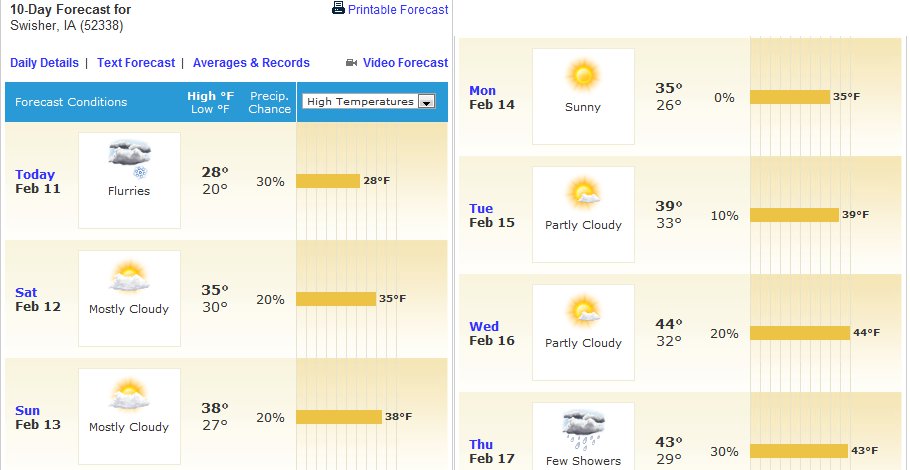
Related to all of this, we probably won’t travel much in January/February, for a few reasons.  One, we live in Iowa.  Iowa is cold.  Really, really cold.  The 3″ of snow that fell today will probably still be here in March.  So yeah, we’ll probably stay bundled up and keep as warm as possible, without going anywhere besides work.  The other reason (the real reason…) is that Meg hasn’t been traveling well recently.  It just seems like we go places and she gets off whatever sleeping schedule we finally settled her into, then it takes at least a week to get her back to something semi-normal.  She also tends to get sick, in some fashion, shortly thereafter.  I’m sure a lot of this is related to the teething (that she’s finally showing some progress in!), but the constant traveling can’t help.  It just seems like we make some progress at getting her to a normal routine, and then it’s dashed within a weekend!  We have gone to Columbia, Hannibal and St. Louis a few times over the last few months.  She generally does fine in the car, and is great for most of the day, but overnight…eeeeeeesh…

So yeah, that’s this year’s plan.  Weather/sickness depending, as usual.  We’re just going to make a concerted effort to get through it all mostly unscathed, survive winter, and make it to Meg’s first birthday.  Mark your calendars for March 5th!

This whole “War on Christmas” thing…

The Daily Show With Jon Stewart Mon – Thurs 11p / 10c
The Gretch Who Saved the War on Christmas
www.thedailyshow.com
Daily Show Full Episodes Political Humor The Daily Show on Facebook

For some reason, this week marked the first time in 2010 that I heard mention of this year’s “War on Christmas,” first in church and then in the “Daily Show” clip embedded above.  At church this past Sunday, it was proclaimed twice (not by the pastor) that we should all remember that “Jesus is the reason for the season” and that we should all say “Merry Christmas” rather than “Happy Holidays.”  In the clip above, Jon Stewart highlights Fox News’ personality Gretchen Carlson as going off on the city of Tulsa, OK for changing the name of their 70-year-old annual “Christmas Parade” to the “Holiday Parade”…back in 2009…

Now, don’t get me wrong, I understand the frustration.  Christmas is a holiday celebrating Jesus’ birth and, thus, is a Christian holiday.  And this Christian holiday has been hijacked by all these other groups, including the atheists that believe in Santa Claus, or the Jews and their Hanukkah celebration.  We should all stand up against this onslaught and proudly exclaim “Merry Christmas” to everyone, and help ensure that we get a “Merry Christmas” back instead of the more generic “Happy Holidays” (you know, ’cause there’s only one real holiday…so we can’t make it plural). <end sarcasm here>

As the last half of the video above suggests, this trend is hardly new.  If you watch many of the old classic Christmas movies, including “Rudolph,” “A Christmas Carol,” “How The Grinch Stole Christmas,” etc., you won’t find much mention of Jesus.  Only “A Charlie Brown Christmas” comes to mind in mentioning it at all, with the iconic recitation of the Christmas story by Linus, but that still only lasts a few minutes compared with the rest of the plot line.  Why, exactly, these TV and radio personalities are so uppity about it in recent years is beyond me.  It’s been happening for decades.

What Carlsson, and many, many others, fail to understand is that Jesus of Nazareth wasn’t actually born on December 25th, and that the date was (likely?) chosen by Rome because of other festivals occurring around the Winter Solstice; or the fact that Hanukkah predates Christmas by almost two centuries.  These people miss  the fact that the very idea of “Christmas” has become something more to the general population of the world.

A time of peace.  A time of giving and sharing.  A time of remembering and helping the less fortunate.  A time for friends and family.  A time to end hostilities between you and your neighbor.  A time to think back on those that have gone before you, and a time to watch new lives grow.

Whether or not you ascribe the holiday to Jesus, Santa, the Flying Spaghetti Monster, or someone/something else: shirley these are tenets we can all agree on.

I’d be willing to bet that Jesus would rather you love and remember your neighbor, instead of getting caught up in saying “Merry Christmas.”  He’d want you to say something.  And mean it.