New Brewing Toys

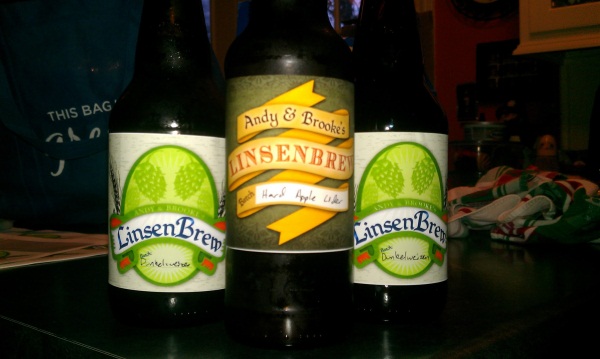
While I received quite a new wonderful gifts for Christmas this year, I thought I’d mention a few of the brewing-related ones here.  Firstly, as you see above, my talented sister was kind enough to design beer bottle labels for us!  Two different versions, both of which look quite good (though the “hop”-containing green one is probably my favorite), and labeled “Andy & Brooke’s Linsenbrew.”  How exactly we never thought of “Linsenbrew,” I’ll never know, but I certainly got a kick out of these.  I’ll probably only use them on beer batches I save for aging, and for those I take places or give away (these three are destined for my cousin, for example), but I’m very glad to have them!

In other brewing news, we got some additional equipment that I’m looking forward to trying.  We got two wort chillers, which are essentially just “radiators” that pump cold water through copper tubing that you put into the wort after you boil it for an hour.  It’s important to cool the wort down as quickly as possible before adding the yeast, and up until now, we’ve usually filled the sink with ice and cooled it down that way (frequently taking 2+ hrs…).  Now, we have a means of cooling it down much more quickly, which will cut down on brewing time considerably.  We’ll probably use one of them for beer, and the other we’ll use for Brooke’s yogurt, which also requires a cooling step before you’re done.  Each chiller has slightly different fittings, so we haven’t decided which one will be used for which purpose, but regardless, we’re looking forward to giving them a try.

I also got a bottle drying rack, similar to this one.  Usually, I just clean each bottle and let them dry upside-down in laundry baskets.  This is a “functional” solution, but isn’t exactly ideal.  I usually need around 45 bottles cleaned, with the remaining beer going in 1 L or 2 L bottles.  This drying rack should take up far less space and leave the laundry baskets available for…you know…laundry…

Finally, we got a Chinook IPA beer kit.  This is a kit I’d considered doing awhile back but hadn’t tried it yet.  The key reason I wanted it was because it only takes around 6 weeks to make, while other IPA varieties like to have 2 months fermenting, followed by bottling and conditioning.  The last IPA I made got quite a bit better with an additional month of aging so, while I thought it ended up fine, it sure took a long time to be “drinkable.”  Hopefully, this recipe solves that issue.

So yeah, got some new toys for Christmas to feed the beer brewing needs.  I may get a chance to brew this one on New Year’s Day, but could push it off a bit, yet.  Then, we need to start thinking about what the next batch will be, likely either a Cream Ale or a Czech Pilsner.  We’re trying to get a recipe that’s radically different from the others we’ve made, as the Dunkelweizen that just finished tastes pretty similar to some of the others we’ve made.

Happy Holidays

From the Linsenbardt family to yours, we wish you a merry Christmas and a happy New Year. Be safe and have a good time with family and friends this season!

Tour of St. Louis Breweries Update

Since moving away from St. Louis in May, 2010, a ridiculous number of new breweries have opened, mostly within the “midtown” area. This explosion in the St. Louis brewing scene has been important enough to make national news in New York Magazine, among others. Of course, all this happens after we move away, but now that we’re back, we can finally partake in some of their wares.  I assume they are springing up because St. Louis does a good job with their water supply (in support of Anheuser-Busch…).  At the very least, I’m glad they’re mostly springing up in the City itself instead of the various surrounding municipalities.

Last night, I went along with old college roommate buddy, Tony, to Perennial Artisan Ales, located in an old Coca-Cola plant that has since been converted to lofts.  Tony lives above the place, so he goes down for a fresh pint from time to time (likely more often than anyone should…).  The neat thing about this place is that they really focus on different beer styles with odd flavorings, so they are purposefully trying to make a distinction between their beers and others in the city.  Their on-tap roster consists of a Southside Blonde, “Saison de Lis” Chamomile Saison, Hommel Bier, and Abraxas (a Mexican Chocolate Stout).  Each week, on Thursdays, they host tastings of some new beer they are unveiling, done on a small, 5 gal scale.  Basically, the head brewer just does what any home brewer does and then, if it’s good enough, they consider scaling it up to a full batch.  They just invest a little bit in materials to test it and then get their customers to tell them whether it’s worth production or not.  Last night’s was a Rye beer that tasted quite good, though the color left much to be desired (i.e. it wasn’t the most attractive beer I’d ever had, but after you taste it, you forget what it looks like).

I tasted a few of them.  The Hommel was the “hoppiest” beer they had, so it’s the one I ended up buying for the evening.  I tasted their Chamomile Saison, which was pretty fascinating.  Chamomile is one of those flavors/scents that you recognize, but can’t always name, but believe you me, you could tell it was in this beer.  The flavor was good and very distinctive.  They also have a Strawberry Rhubarb Tart on occasion.  I can’t begin to imagine what it would taste like.

But that Abraxas.

Wow.

Seriously, it may be one of the best beers I’ve had in a long time.  And I didn’t go there thinking I’d like it that much.  The closest descriptor I could come up with as I had some was “it tastes like Christmas.”  It was chocolaty, but wasn’t overwhelming.  Its texture was definitely stout-like, but not too thick.  The beer was 10% alcohol, so I didn’t want to have a whole one and then drive home later, but geez did I want one.  They sell wine bottle-sized versions of their beers that you can take home, but it was going to be $20 for that one.  Perhaps after Christmas, I’ll grab one so Brooke can try it.

Their location is about as far south in St. Louis City as you can go, and they aren’t in what I’d consider to be a very good location.  I certainly hope they survive, at least long enough to keep their production going there and then sell their beers through bars in the city.  These guys are offering what few others are and are truly innovative, I think.

After having the beer at Perennial, I went upstairs to Tony’s and he shared some Black IPA he and his brother brewed awhile back.  Truly spectacular.  I don’t think I can let him have any of ours because his is far better.  That, or we’ll have to switch to full mash brewing techniques…

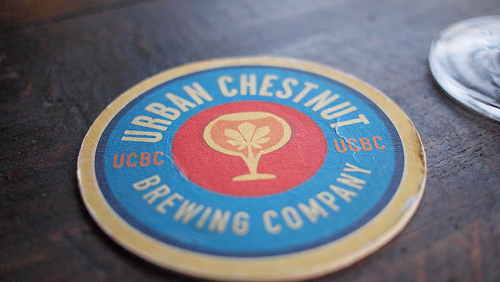
When Meg was staying with her grandparents a few weeks ago, Brooke and I checked out another new brewery, Urban Chestnut, and were pretty pleased with that one, too.  They are located closer to SLU, so their building is a bit easier to get to and probably a popular destination with college students and other loft dwellers from that region of the city.  Their offerings are a bit more standard, with a variety of German-inspired beers to choose from.  We tasted 5 or 6 of them, and then got a pint each.  If I recall, the Pilgrim 7 was Brooke’s favorite, and I ended up having a Holzrauch, which is German for “wood smoke.”  Now, this isn’t a beer I would ever attempt to have a 6-pack of, but it was so different, I had to have a full pint.  In the end, I think it would be best consumed with food, rather than just sipped, but it was still very good.

Overall, I’d say I preferred Urban Chestnut’s location (they have a very nice covered outdoor area with a fire pit and wood chips down, to let you sip your beer by an open fire…a nice touch!) over Perennial’s, but I preferred Perennial’s beers over Urban Chestnut’s.  Still, the important thing is that St. Louis’ brewing scene is getting even larger, making our move back to the are all the more fortunate.

The Value of Content

I watched “Page One: Inside The New York Times” on Netflix Sunday.  It’s a documentary that focuses on the NYT as an institution in news reporting in the United States and the world, but also discusses the changing face of media (e.g. blogs, Twitter, etc.) and the ability of just about anyone to put out “unfiltered” news directly to the general public, as in the case of the WikiLeaks debacle from last year.  The documentary is pretty interesting, though I think they “bounced around” a bit more than I would prefer without any good transitions.

One of the recurring themes in the documentary was the battle currently being waged between “Old Media” and “New Media.”  For example, you can go to practically any news blog now for your news as many people do, but practically all of them just re-word and re-post the same information that was originally presented in the NYT.  Thus, the regular consumer of news gets their information for free without every having to visit the NYT website or pick up a paper, and therefore, the NYT never gets any ad revenue or subscriber fees from the reader.

Which leads to the central question of the documentary: how long will this be sustainable?  Or, re-worded, how long can the New York Times, and institutions like it, survive in a “digital world” using their traditional economic models?

I heard a related story on NPR last week talking about Amazon and Apple (but mostly Amazon) and how the European Union is investigating them for antitrust violations with regards to e-book prices on their respective stores.  These two companies essentially dictate to the publisher how much money they will sell their books (typically around $10), while the publishing companies used to be able to charge quite a bit more than that for a hardcover new release (let alone the fact that they set the price, not the distributor).

Now, in the case of the Times, I’m not really sure what the solution is.  They have already taken steps to increase revenue by charging for their website, and I think that’s helping.  At the very least, they’re making an attempt to survive the transition into digital media.  Likely, as tablets broaden their reach to consumers, they will be able to charge for their app, or access to stories, effectively turning tablets into digital NYT readers.  There is certainly money to be had if you produce a good app, and the NYT has a pretty decent one.  It’s unfortunate that a lot of people out there don’t understand where news comes from and that most of these blogs a). don’t actually investigate their own news (they just re-post it from other sources), and b). frequently have some kind of agenda, so it may not be as objective as it should be to be considered capital-J “Journalism.”  There is a value in actual news and people are willing to pay for it: the NYT just needs to figure out how to sustain the same standard of Journalism while operating under realistic expectations of what the public will pay for it.

In the case of book, movie, and music publishers, though, I think they need to adjust their model quickly.  For example, if one considers a new-release book at Barnes and Noble, it’s likely it would cost you $20 or more.  It simply doesn’t make sense to charge $20 for a digital copy (as publishers would love to do).  The same thing goes for movies: I’m not going to spend the Bluray price of a movie for the digital version.

Now, those full prices don’t typically occur for movies and books because of the digital systems that have grown up to deliver the content for you.  For a new movie like Rise of the Planet of the Apes, you’ll spend $22.99 for the Bluray and you’ll spend $14.99 for the digital version, so there’s some premium for the physical copy and some discount for the digital copy.  In video games, this typically isn’t the case, however.  When the newest Call of Duty game came out on PC, it was $60, regardless of whether you got a physical disc in a box or if you downloaded it.  With games, though, there has been something of a “relationship” developed between the publishers of games and the retailers (e.g. Gamestop, Wal-Mart, etc), where the publisher could offer a discount on a digital version, but in order to appease the brick-and-mortar retailer, they keep it the same price so you still may go into their store.

Ultimately, “Old Media” needs to realize that they can’t support the distribution systems that they used for the past few decades.  This is starting to happen with books, where locations like Borders went bankrupt because they couldn’t make the transition to a digital age.  Companies like Gamestop are starting to make the transition, offering a digital streaming service not unlike Netflix Instant.  Companies like Wal-Mart will probably just stop offering games and movies, eventually, but they’ll survive because they sell other things (among other reasons).

But the publishers still have much to worry about.  Their teams of editors, binders, layout people, and so on and so forth.  Teams of people that were needed in order to lay out print for publication or to set up distribution chains for each product.  Or that were needed to design the inside of game manuals.  Or to design the cases that your DVD or Bluray came in.  These are all things that just aren’t (as) necessary in a fully digital world.  You don’t need to worry about distribution when you can just sell it on the internet to everyone.  However, publishers are still trying to charge additional money on the digital side in order to support these folks on the physical side of their product.

Now, my solution to this problem is to increase the cost of the physical media and further decrease the cost of the digital one.  If there’s anything apps on the iPhone or Android have shown developers, it’s that selling your product for $1 means that you’ll sell to additional people, and you’ll make your money back on volume.  I mean, if you could just buy a new release movie for $5, would you do it? Would you even think about the purchase?  Would you care if you only watched it one time?  That’s cheaper than a single ticket to go see the movie in theaters.  If new movies, digitally distributed, without any special features were $5, I think they’d sell more.

But again, publishers should still hang on to their “physical media” production scheme, as there will still be people that want an actual Bluray disc.  And I definitely know that there will be people that want a physical book, rather than an e-reader form.  But wouldn’t more people buy books if they were $5 for a new one, rather than $20?  Sure, pay the premium if you want a nice, hardcover, bound, indestructible copy of a book for your collection, but don’t make people that just want to read the book help finance other people’s need for a physical copy.

There’s a somewhat longstanding psychological “principle” in gaming related to the $100 price point.  Once any gaming console hits $100, then many consumers won’t even think about the price.  It’ll become an impulse buy.  A similar phenomenon happened with the Wii when it released, and it cost $250.  But at that price, it was cheap enough as an impulse buy for many people just to play Wii Sports.

“Old Media” publishers need to find the “impulse buy” price for their products.  In the case of movies and books, I think $10 is a fair price to charge, but $5 is the “impulse buy” price.  Once publishers start selling their wares down there for a digital form, I think they’ll make their money back on volume, and only then will they survive.

Edit: I read this article from Slate today, discussing Amazon and its tactics that end up hurting brick and mortar bookstores.  I particularly liked this line:

But say you don’t care about local cultural experiences. Say you just care about books. Well, then it’s easy: The lower the price, the more books people will buy, and the more books people buy, the more they’ll read.

Yup.

Review: The Muppets

My history with the Muppets doesn’t really involve The Muppet Show, per se.  While it’s a show I’ve seen countless clips of over the years, it’s just nothing I’ve ever been a huge fan of.  My memories are of The Muppets Take Manhattan, Muppet Babies and A Muppet Family Christmas (which we had taped one year and watched religiously each holiday season).  So my interest in the new film, The Muppets, stemmed more from the way it was made rather than the subject matter itself.

Jason Segal (of “How I Met Your Mother” fame) stars in The Muppets, but he also co-wrote the screenplay.  He discussed it on NPR last week, which piqued Brooke’s interest and further solidified the fact that I/we needed to see the movie.  The article discussed a range of things, but the points that were of greatest interest to me personally was that they wanted to make the movie with as little CGI as possible, and they wanted to produce a comedy that relied on “old fashioned ideals,” rather than most of the other comedies out in theaters today (e.g. anything by Judd Apatow…not that it’s a bad thing, but it’s nice to see an intelligent “family comedy” from time to time).

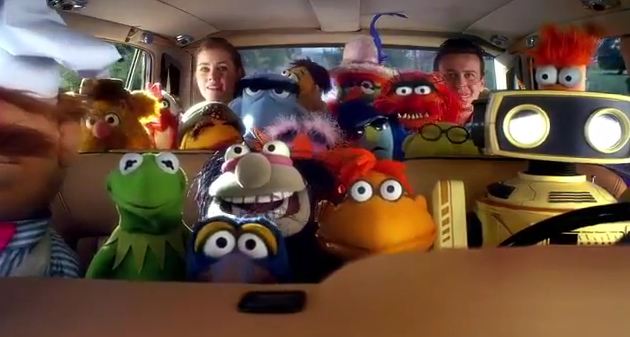
The movie itself centers on Segal’s character (Gary) and his brother, Walter, who is a Muppet (Note: it is not explained how, exactly, this happened.  Brooke and I wonder whether Walter was adopted, or whether Gary was, as we never see the parents.  I’m hoping I never have to explain this kind of genetic splicing to Meg someday).  Walter goes with Gary and his girlfriend, Mary (Amy Adams), to Hollywood to see the old Muppet Theater, something that Walter had dreamed about since he was a child.  Once they get there, they find out that an evil businessman (Chris Cooper) wants to buy the theater and tear it down to drill for oil, leading Walter and the gang to round up the other Muppets to organize a telethon to raise the money to buy it back.

It was great seeing all the memorabilia around the theater, including old photos and clips from the old Muppet Show.  As I mentioned before, it’s not like I watched the original show all that much, but it was still neat seeing that history displayed with such reverence on the big screen again.  The movie seemed to be reaching back into television history to a time when a show like that could make it on television, where in today’s world, the only way you’ll see Kermit The Frog on prime time is if he’s on an island or is living in a house with strangers.  Many of the themes in the film could be considered “traditional,” but in this presentation, it seems more like “timeless” than anything.

The movie was also pretty funny.  Not really “laugh out loud” funny or anything, but definitely chuckle-worthy and amusing.  The self-referential humor was the most entertaining to me: stuff that may fly by a kid, but would still be funny to an adult.  Chris Cooper would say “maniacal laugh…maniacal laugh…” rather than actually laughing in that evil way, for example.  Or that they would “travel by map” to get from one location to another quickly in the story (like taking a car from the U.S. to Paris).

I was a little disappointed that they didn’t give the actors more to do, however.  Amy Adams was in it from the beginning, but didn’t really do much until the last half of the movie.  During the telethon, there were almost countless cameo appearances, but while you saw folks like Judd Hirsch and Neil Patrick Harris answering the phones, they didn’t have any actual lines of dialog (while others like Zach Galifianakis and Jim Parsons were a bit more prominent).  It was obvious that the writers brought people in from multiple generations, so there would be cameos from people practically anyone would recognize (who the heck is Selena Gomez, anyway?).

But, this was a movie about the Muppets: not about the humans.  And in the end, you’re left with a “feel good,” entertaining movie that brings a lot of familiar faces back together, and together for the first time.  They did a great job with this movie, and they did it without 3D and with barely any CGI, proving that you can still tell a great story and make a great movie for kids and adults that only involves puppets and a few supporting people.

In today’s world (and if the previews before the movie are any indication, where almost all the previews were for upcoming CGI or 3D movies…) that’s certainly an accomplishment.

The Wheels on the Bus

Washington University School of Medicine, where I work, doesn’t have what I like to call “cheap parking.”  If I recall, it’s something like $60 or $70 per month to park within a few blocks of the building I work in, and personally, I’d rather spend that kind of money on video games or beer.

However, as part of their sustainability initiative, Wash U pays for all students and employees to have a yearly St. Louis Metro pass.  This means that, so long as I have the pass and present my University ID card, I can ride any bus or any MetroLink (the above-ground train system) for free.

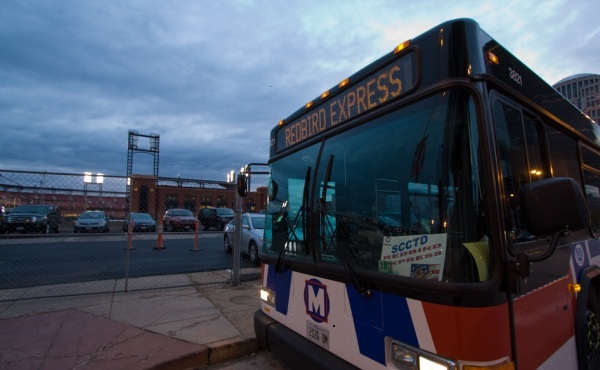
Unfortunately, though, while the MetroLink has a reasonably decent reputation with regards to cleanliness and timeliness, the MetroBus system doesn’t.  And furthermore, we don’t really live anywhere near a MetroLink stop where I could hop on, at least, not in any convenient manner.  Therefore, I’m riding the bus.  The “scary, dirty, slow,” bus.

To be fair, I’m only riding it in the evenings.  Brooke is driving me to work in the mornings, then dropping Meg off at daycare and then finally going to work herself.  Most mornings, this isn’t a problem, though there’s something of a “sweet spot” in timing that we try to avoid.  If we leave the house by 7:40 am, or after 8:15 am, we can get me to work in 15 min or so.  If we leave anytime inbetween, it’s closer to 30 min.  Yay, St. Louis traffic.

But in the evenings, I’m riding the bus.  Brooke picked me up for the first week or two, since I didn’t have my bus pass yet.  This “worked,” but Meg wasn’t exactly happy having to sit in her car seat for nearly 45 min every afternoon.  It’s made things much easier now that Brooke can just bring her straight home.  My bus trips tend to take 20-30 min in the evenings, so it isn’t a huge deal.  As long as I leave before 6:00 pm, there are buses running just about every 20 min to the stop(s) near my building.

The buses themselves are alright.  They aren’t all that dirty, and while I haven’t exactly figured out the best time to go outside to wait at the stop, I can’t really say that they’re consistently late or anything.  The bus stop where I get off the bus is on Kingshighway, so after I get off, I still have to walk a few blocks before I get home.  Right now, it isn’t an issue, but once we get a foot of snow on the ground, I may think otherwise.

I do want to address the “scary” part of the city bus stereotype, though.  Is the bus full of rich, white, Americans?  Nope.  Lots of African Americans, lots of Hispanics, lots of elderly people, lots of low-income people…and lots of other people inbetween.  Heck, on the ride home last night around 5:30, white people out-numbered black people 2:1 on my bus.  Was I a bit apprehensive the first time I rode the bus, looking down the aisle at the various “characters” that I’ve been told would terrorize me over the last decade?  Yeah, I probably was, to some extent.  Now, after a few weeks, it’s pretty easy and I don’t give it a second thought.  And, to be fair, there are seemingly “well off” people riding the bus as well.  Perhaps not as many, but they’re there.  In total, it’s probably the most diverse place you’ll find in the greater metropolitan area.  And they just want to get where they’re going each day without much fuss, just like anyone and everyone else.

I guess I think it’s important that I ride the bus, partially to show others that it really isn’t all that scary, and partially to “walk the walk” when I talk about sustainability.  Mass transit, overall, is a good way to save money and help the environment.  It takes cars off the road and reduces demand on gasoline.  Because there are fewer cars on the road, that means fewer cars that go to scrap yards some day, fewer tires that go into the landfill, and fewer emissions that go into our air.  Generally speaking, using mass transit is an ideal way that people can do their part to help the environment.

There are plenty of people around that think we should all use mass transit more often, but these same people wouldn’t be caught dead on a city bus.  The city bus isn’t good enough for them.  The city bus is dirty and dangerous and they will only use services like MetroLink, or like the Metro system in Washington, D.C.  Rather than submit to riding the bus, instead, they will drive their car that 4 miles and park it, even though the amount of time spent doing so is equivalent to riding the bus.

I’m sure I’ve told people in the past that I’d use public transportation if I had it.  And for many years, I didn’t consider the bus to be “public transportation.”  To me, and to many others, I’d argue, “public transportation” equals “light rail,” while “riding the bus” equals “only for poor people and minorities.”  Maybe it goes unsaid, but that’s the general impression I get from other people when the prospect of “riding the bus” comes up.  However, the only reason light rail systems like MetroLink exist is because there were enough people riding buses for that distance that it made financial sense to build a rail system.  Thus, the more people that ride buses within the city of St. Louis, and other communities, the more likely municipal officials will be to finance more light rail systems.

Therefore, I’m trying to “walk the walk” after “talking the talk” about mass transit.  If I can do my part to ride the city bus, I’ll do it as long as I can.  It saves me money and it saves my wife and kid time that they don’t have to be in the car to pick me up every day.  Win/win.

But in the end, if the bus is good enough for the other people that ride it, the bus is good enough for me.

New Brewing Setup

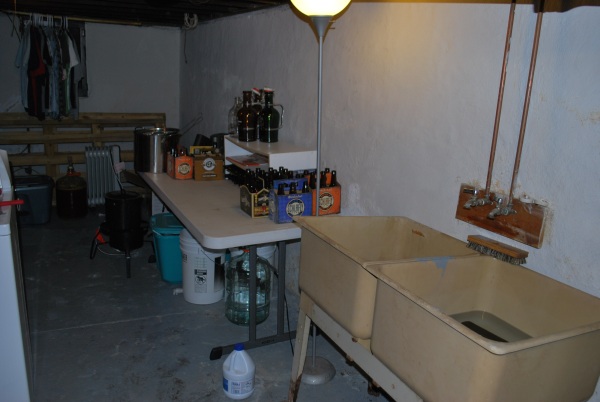
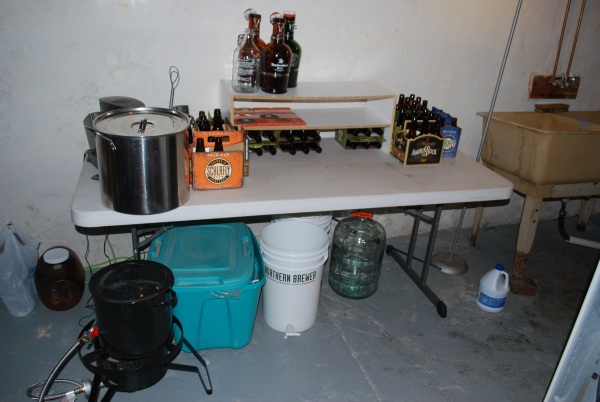
Since moving in a few weeks ago, I’ve slowly been trying to get all my beer brewing materials moved to their ultimate destination in the basement.  One of the perks to living in this house is the double-sink down there, allowing for soaking and cleaning of bottles and other brewing gear without the need to take over the kitchen sink.  Unfortunately, however, the sink was clogged up (likely from whatever painting and plastering materials had been cleaned previously in that sink…).  Anyway, I think I’ve got it mostly cleaned out, though running water through it over the next few weeks will probably help dislodge whatever’s left in there.

Regardless, I set up our large folding table next to the sink and have stacked most things either on it or under it.  I probably need something a bit better for all the bottles, but for now, this will do.  I also ran an electrical cord around so I could plug in an old computer stereo set to listen to music and podcasts while working in the basement.

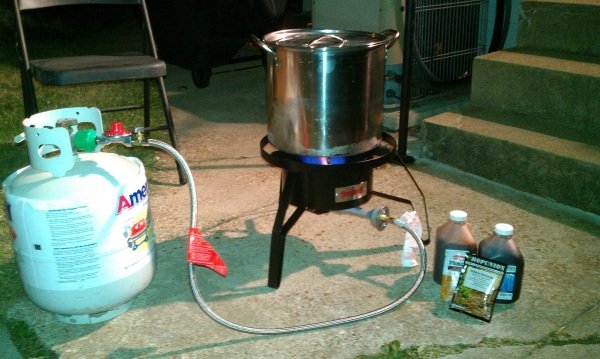
For my birthday this year, Mom and Dad got me an outdoor propane burner and a large, 5 gallon brew pot, which I finally got to use last week.  Obviously, I can only use it outside, but I can already tell this is a better way to go than using an electric oven.  It’s usually very easy to get a “boil-over” using the electric range, but with gas, it’s very easy to back off with the heat to slow down the boil.  Thankfully, it was a beautiful night last week to brew outside.  I’m probably not going to be so lucky when I’m out brewing in February, though…  😛

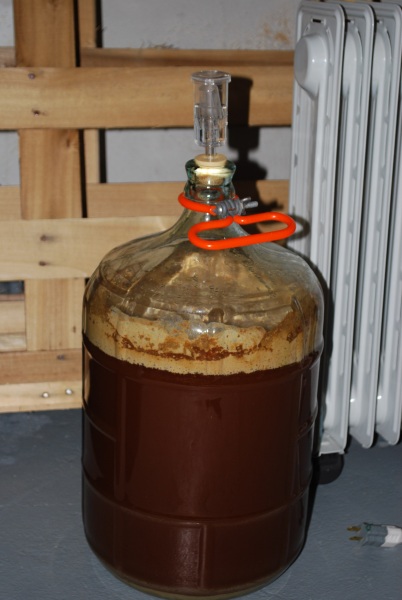
Last, but not least, here’s our first beer in the new place: a Dunkelweizen.  It’s still bubbling away downstairs and should be ready for bottling early in the week after Thanksgiving.  Brooke’s hard apple cider is already in bottles and should be conditioned well enough by Thanksgiving, however this Dunkelweizen will probably not be aged long enough until Christmas.  I think we’ll probably try to get another one fermenting within the next week or so.

Anyway, I’m excited about the new setup.  Should make it easier to clean up and get some brewing done without having to get the kitchen cleared up in time for brewing.  Hooray, beer!

Fred Flintstone Wants To Kill You

I’m slowly catching up on podcasts from the last few weeks when I wasn’t really in Podcast Listening Mode, and recently, I listened to On Point’s discussion on recent research on vitamins.  Much of the discussion focused on recent reports suggesting that over-dosing on vitamins for years could do more harm than good.  Specifically, they discussed a recent study called the Selenium and Vitamin E Cancer Prevention Trial (SELECT) where men took the daily recommended dose of Vitamin E and were found to be 17% more likely to develop prostate cancer over the 7 years they were followed.  This news comes after another recent study from the Archives of Internal Medicine suggesting that multivitamins, folic acid, and iron and copper supplements may increase mortality in older women.

This all reminds me of what Dr. Shaffer told us in psychopharmacology class back at Truman: you don’t need vitamins if you eat a healthy diet.  Human physiology is set up to absorb the nutrients you need and get rid of the ones you don’t, provided you eat the diet your body needs to survive.  This includes vegetable, dairy, grain and meat sources.  If you start removing any of those sources of food, you either a). replace those nutrients with something like a multivitamin, or b). die sooner.  Apparently, however, new data like those referred to above suggest that even with the replacement of nutrients, your body still may not be very happy with you.

Brooke and I talked about this a few days ago and we both had a question about Folic Acid (Vitamin B9) intake, as this is one of those vitamins pregnant women are instructed to take to limit the risk of congenital malformations of children, including spina bifida and cleft palate.  The recommended daily allotment of Folic Acid is between 400 and 800 ug for a pregnant woman per day, though your doctor may prescribe more if there’s a history of problems in your family.  Bear in mind, however, that it’s important that women of child-bearing years have Folic Acid in their diet or take supplements before they are pregnant, as it’s more important in the early stages, before many women even know they’re pregnant.

Speaking of which, what are the ways to get Folic Acid in your diet, aside from a pill?  Spinach, peas, beans, egg yolks, sunflower seeds, white rice, fortified grain products (e.g. pastas, cereals), livers and kidneys, among others.  Now, I ask you: How many women between the ages of 18-25 are eating anything from that list on a daily basis?  I’d guess not very many.  They’re probably going to get most of it from breads and cereals, though the recommended daily allotment of folate is added to the product: it’s not endemic to wheat.

(Side-note: The U.S. government, on their Women’s Health fact sheet, says that vitamins are still essential to ensure you are getting the daily allotment of folate every day, and that it’s possible to do so by diet alone, yet difficult.  Anyone reading this should go by what their doctor tells them.  I’m only using folic acid as an example.  I am, by no means, a medical professional.  :-))

I guess my larger point is that vitamins are alright, but trying to rely on them in order to avoid eating foods that we as Homo sapiens have evolved to require over millenia is unwise.  It’s more important that we get proper dietary sources of vitamins and minerals that our stomachs have “learned” to take advantage of for generations.  This isn’t to say you should only eat organic food, or only eat food that you grow yourself.  Sure, organic sources can be healthy, but I’d argue that it’s better you eat your broccoli every day regardless of whether it’s organic or not.  Women of child-bearing years should be eating food from the outlined sources above anyway.  Men at risk of prostate cancer should be eating grapes, leafy green vegetables, and avoid trans fats anyway.  Heck, regardless of whether you’re “at risk” of prostate cancer or “at risk” of becoming pregnant, these are things you should be eating anyway.

So yeah, I don’t really think that vitamins are that bad for you.  But what is bad for you is trying to rely on them, or other supplements, as a substitute for a healthy diet.

(Final Note: An actual medical professional posted this article up on Huffington Post to help assure people that they shouldn’t necessarily stop taking all their vitamins and that there are some flaws in the conclusions being drawn from these studies.  As with anything in science, more studies are needed to come to any real conclusions on this matter)

Back in the Swing of Things

Here's what I'm using all day now.

I’m sure I’ll have more to report on in the future, but for right now, I can safely say that I’m settling in at the new job.  I’ve been telling people for awhile now that there would be a definite “learning curve” with the science carried out here, and believe you me, I wasn’t kidding.  I’m having to re-learn basic circuit mechanics (i.e. resistance, capacitance, voltage, etc.) from physics class 8 years ago in order to comprehend the bulk of what I’m doing, so that’s where much of my learning is coming from.  The rest of it is coming from the actual manipulations of cells in order to collect meaningful data.

Basically, what I’m doing now in the lab of Steven Mennerick in the Department of Psychiatry at Washington University, is termed “electrophysiology.”  It’s a technique used to record changes in current and voltage across the membrane of a cell, in this case, hippocampal neurons from mice.  I’ll write more about this in a Primer sometime after I get more settled, but in short, the process involves attaching an electrode to the interior of a cell, and then a second electrode outside the cell in the surrounding fluid.  Depending on what drugs and ions you have present in the two locations (intracellular and extracellular), you can record peaks that look very much like ECG recordings from your heart.  These peaks will tell you whether sodium, potassium, calcium, chloride, etc. are entering or leaving the cell, which in turn tells you about how the cell functions.  Specifically, it gives you insight into neurotransmission, as the process of a cell receiving a neurotransmitter (e.g. dopamine, adrenaline, etc.) must involve some change in the flow of ions across the cell membrane.

The rig pictured above is the one I’m learning on.  It’s a large microscope with some tubes and electrodes running up to the state where the dish of cells sit.  Then, you use some little knobs and widgets to move the electrodes very slowly toward the cell so you don’t kill it by “popping” it.  So yeah, this takes some practice.  You have to make sure you don’t break the cell open, you have to make sure you don’t damage your electrode, and you also have to make sure you’re doing everything fast enough so that certain components of the system don’t “go bad” to the point where you need to replace them.  There’s a healthy balance between speed of operation and “care” of operation in all of this, for sure.

Aside from learning how to actually puncture and gather data from the cell, I’m having to learn about the aforementioned physics of circuits.  Good thing my Dad works with circuit breakers, just in case I ever need some help.

I’m definitely making progress, though.  I’ve been able to successfully puncture (or “patch,” as the technical lingo goes) more than a few cells, so right now, I’m working on consistency more than anything.  I’m hoping to get some more reading done today or tomorrow so I begin to understand why I’m doing some of the things I’m doing.

At the very least, it’s keeping me busy.  🙂

Jolicloud

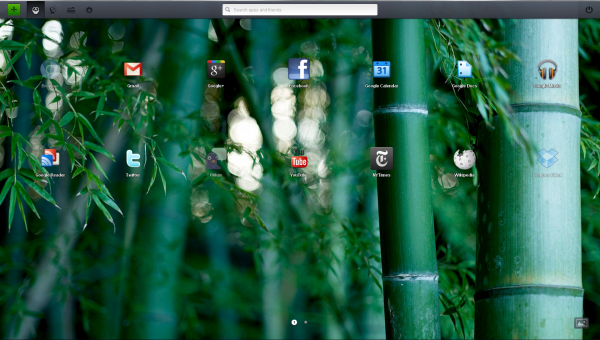
This is what the desktop screen and apps look like in Jolicloud.

I’ve mentioned previously that we’ve got a Dell Mini 10 netbook.  To be honest, it doesn’t get as much use as it did a few years ago when we lived in St. Louis and our desktop computer(s) were on a different floor.  Once we moved to Swisher, and now back to St. Louis again, the desktop is only a room away from the living room, so there isn’t much of a need to have a laptop constantly running…let alone the fact that we both have Android smartphones now, where it’s even faster to look something up quickly if it’s needed.

Thus, I get to “play” with the netbook a bit more than I used to.  I find Windows XP to be extremely slow on the system: slow to boot, slow to open programs, slow to do just about anything.  Therefore, I’ve toyed with a few different alternative operating systems.  Because Ubuntu 11.10 appears to have some serious issues with the graphics chip on the netbook, I decided to give Jolicloud a try.

Jolicloud is based on Ubuntu, incidentally, but runs quite a bit differently.  It’s designed to do everything within a browser as much as possible, though it is capable of having stand-alone programs installed as well.  In the desktop screen pictured above, most of those programs are opened within the Chromium web browser.  You can listen to music, edit documents, use maps, check your status updates, and browse the internet just as you can from any other computer.  The benefit here, though, is that the netbook is much more responsive because all it’s effectively doing is loading a web browser.

I guess the main downside is that it really requires an internet connection of some type, so if you aren’t on wifi anywhere, you can’t use the OS (to do anything productive, at least).  But hey, where does that happen anymore, anyway?

I’ve referred to cloud computing in the past.  Like many things, I think it works remarkably well, but you just have to know what you’re getting into before you boot the system.  Know what the strengths and weaknesses are before even trying to go that route.  You can’t expect to run Photoshop using low-powered devices that are designed to only operate within a web browser.  At the same time, though, you can get away with cheaper hardware with remarkably fast boot times and functionality.  So yes, a trade-off.

I’m enjoying it for now, though.  It’s always fun to install a new operating system and see what it can or can’t do.  At the very least, it gets me to use the netbook more often.  Still a good piece of hardware that has a few more years left in it due to software like Jolicloud.