Brewing Necessities

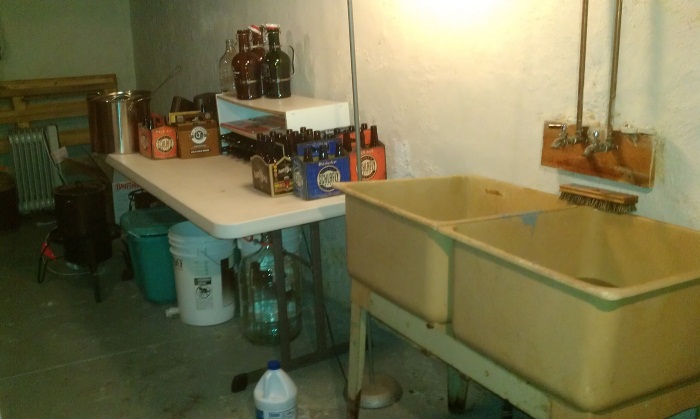
The bulk of my brewing equipment, though I’ve got a bottle drying rack on that table now, too.

In the last few years of brewing beer, I’ve accumulated a few additional “toys” beyond the standard brewing kit you can get from just about any retailer.  Thus, I thought it could be helpful to outline some of the other accessories that I think are “worth it,” as funds become available.  I’m going to go in order of what I’d recommend acquiring first, and then go down to other “nice things to have,” plus a few things I don’t have yet, but are definitely on my list of upgrades.

Please note that I’m linking to equipment through Northern Brewer, but in many cases, these aren’t the items I’ve got.  I just wanted to link to examples and am too lazy to track down the exact stuff I’ve got.  Do some research to get the best deals, but these are probably solid examples of what to expect and how much they tend to cost.

  1. Propane Burner – To some degree, this depends on how good your oven range is, but even if it’s a good one, I’d still recommend getting one of these.  Firstly, they’re capable of getting your wort up to boiling in about 20 min.  Secondly, it’s really, really easy to kill the heat, thus stopping spill-over without having to pick up 3-5 gal of wort.  Thirdly, you can do everything outside, so even if you do let it spill over, you don’t have to clean up your kitchen.  Finally, these things are useful for more than just brewing, as you can host a shrimp boil, fry a turkey, etc.  So even though this kind of equipment can be somewhat expensive, I think it’s the first thing to shoot for getting after you get started brewing.
  2. Gasket Bottles – These things are great, so long as you plan on drinking these volumes of beer in a given time.  They’re nice because you can re-use the bottles and re-use the caps and gaskets.  You may need to replace the gasket eventually, but I’ve never had to do it.  Also, depending on where you get your beer, you can sometimes buy beer in this kind of bottle, meaning you are effectively buying a bottle that happens to also come with beer (win-win!).  The 1 L bottle size is probably easiest to come by and most useful for an evening, but the 2 L bottles are nice to have, too.  If you like Grolsch beer, you can get 16 oz bottles from them, or buy the bottles empty.  Regardless, you don’t go through bottle caps this way, and you don’t need to employ a capper.  Definitely worth considering!
  3. Bottle Washer – If you bottle beer, you know that cleaning said bottles can be a huge pain.  Homebrew frequently leaves a film on the bottom of the bottles that’s difficult to remove without a bottle brush, and while those brushes work, they really slow down the cleaning process.  Thus, if you’ve got a sink that can fit one of these bottle washers, I highly recommend it.  They’re only about $12 and are worth every penny.  The nice thing is that mine also fits 5 gal glass carboys, too, which are equally ridiculous to clean, so again, multi-purpose.  They’re probably awesome at cleaning baby bottles, too, but I haven’t tried…  Highly recommended!
  4. Wort Chiller – The need for a wort chiller really depends on your situation, I guess.  Essentially, when you’re brewing your beer, you need to cool your wort down quickly from boiling to around 70 F before you add yeast.  If you’ve just been boiling 3-5 gal of liquid, this can take…a…really…long…  …time…  Thus, you can speed it up with ice, with snow (in the winter…or in Alaska…), or you can get a wort chiller.  Mine works pretty well for cooling down 3+ gal of wort within about 20 min, so it really saves time over what I used to do (putting the pot in the sink and adding ice water to it), which easily lasted an hour or more.  If I had an ice maker in my fridge, maybe I’d have stuck with ice, but in our situation, I don’t have enough ice trays to keep the water cold.  Thus, for me, a wort chiller is pretty awesome.  Not the first thing I’d get, but still pretty useful.  But, if you live next to a 7-Eleven and can pick up a few bags of ice, that works, too.
  5. Glass Carboy – Starter beer kits don’t usually come with these, but having one or two of these on-hand isn’t a bad idea.  The small opening at the top isn’t ideal, and the glass is breakable, but at the same time, it gives you a chance to keep an eye on your beer during the fermentation process.  Also, if you’re concerned about flavors of your beer “leeching” into (or out of) the plastic bucket that usually comes with kits, then glass is definitely your friend.  You can also get these in a 3 gal size, which is nice for small batches (or for hard apple cider).
  6. Bottle Drying Rack – There are ways around this, of course.  We used to clean bottles and put them upside down in a laundry basket with a towel, and that worked just fine.  It took up tons of space, but it worked.  So, I’m saying that there are alternative ways of drying your bottles.  However, for $20, these things aren’t bad to have.  Probably not the first upgrade I’d head for, but definitely a nice thing to have.  
Next Steps (as in, stuff I don’t have yet, but am considering for the future):
  • Temperature control system – If you want to make lagers or pilsners year-round, there are a few options, but the best way is to use something like a freezer with an external temperature control system.  Basically, you put your wort in the freezer, modified with a control box that controls the freezer’s compressor to cycle on and off depending on what temperature the probe inside is reading.  If you want to keep your beer at 55 F, this will make it happen, and temperatures like that are required if you want to make certain beer styles.  If you’ve got a cellar, it may not be required, but if you want to make that style of beer all year, it’s a necessity to have this kind of temperature control.  Otherwise, like me, you can probably only make lagers in February.
  • Fermentation Heater – Depending on your situation, one of these could be useful.  Yeast like to be active at certain temperatures, and if you brew in the winter, you may need to keep your wort at a reasonable temperature for a few weeks.  For example, this past winter, my basement held around 55 F, which is too low for many ale yeasts.  Thus, I used an electric oil heater, sat it right next to the wort, and that kept the temperature closer to 70 F.  However, you can use something like this heating pad to achieve the same goal, perhaps a bit more elegantly.
  • Bottle Capper – The cheap capper that comes with a typical beer kit is “functional,” but it doesn’t cap bottles “cleanly.”  As in, sometimes, the bottle cap will slip to the side as you push down on the handles.  Thus, something more like this one, that you can mount on a table, can be better as you gain additional stability while you cap the bottle, and moreover, you get additional leverage (i.e. strength).  Not the kind of thing, you necessarily need, but wouldn’t be a bad investment for later down the road.
  • Kegging System – There are any number of ways to make this happen.  The cheapest way is to get a used keg and the additional hardware to allow you to carbonate your beer and keep it sealed.  Used kegs can be purchased from a variety of locations, but it’s key to make sure the seals have been replaced.  Still, the used one from Northern Brewer is $161, while the version with a new keg is $224.  Additionally, you can always spring for a fridge conversion kit to allow you to make a keg-o-rator, but for my money, I think a “keezer” is the best plan.  It involves taking a regular horizontal freezer, raising the lid with some 2″x4″ boards, and drilling some holes for the tappers.  It doesn’t involve making holes in the freezer itself: just moving the lid up about 4″.  Of course, a kegging system is a whole other ballgame and it depends on whether you like having your beer in bottles, or whether you want to be “over and done” after you transfer your brew to a keg.  Or whether you want to be able to take a 6-pack to your friend’s house, or if you can live with always taking growlers.  Personally, I like bottles, but having a keg wouldn’t be a terrible thing, either.

Alternatives to the BSA

There are countless examples of this all over social networking.

In elementary school, I wanted to join Cub Scouts.  I think Mom and Dad just wanted me to be sure it’s something I wanted to do, as I had to press them on this for a few years before they relented in 4th grade.  I started in Cub Scouts, transitioned into Boy Scouts, and ultimately completed my Eagle Scout Award in high school, the Boy Scouts’ top rank.

To say “I learned a lot” from Scouting would be an understatement.  Aside from merit badges and outdoor survival skills, I learned team work, social skills and leadership skills from my experience in Scouting that was indispensable as I continued through life.  I have held multiple leadership roles in church, in concert/marching band, and in academic organizations since that time, but the roots of these experiences are drawn directly to Boy Scouts.  I continue to enjoy the outdoors, though I don’t spend as much time there as I used to.  It’s something I hope I can foster in Meg and in our future children as our society moves increasingly forward in this “Digital Age.”

About a month ago, the Boy Scouts of America reaffirmed their position against openly homosexual boys and leaders within their ranks.  It’s a position they’ve held for over a decade, openly, and one where I fully believe they’re on the wrong side of history.  It’s telling when both our Presidential candidates support the organization’s right to hold this view, yet still disagree with it.  As shown in the image above, more than a few Eagle Scouts agree with Obama and Romney and have returned their awards to the Boy Scouts of America to express their disappointment with the organization.

When this news was in the media more prominently, Brooke asked what I thought about the decision.  To be honest, I haven’t completely made up my mind.  I guess I’d like to think that the Scout Leaders I had in Troop 701 wouldn’t have turned anyone away that wanted to be there.  They were quick to provide support to those who wanted to participate, but couldn’t afford the dues or equipment to go on weekend camping trips.  They were supportive of Scouts that needed to focus on their school work rather than meeting obligations for the Troop.  In ways I imagine some pastors disagree with their denomination’s stance on this particular issue, I expect that the Leaders of my troop would have tried to simply “ignore” the issue, rather than actively seek out the homosexuals within their ranks.  Perhaps I’m wrong, but that’s what I’d like to think.

At the same time, I disagree with Chick-Fil-A’s stance on this issue as well, contributing their corporate funds in favor of “traditional marriage.”  To me, it’s bad enough when a corporate CEO makes comments I disagree with, but when the profits of an organization as a whole are used as a tool in a larger fight, it’s a bridge too far.

This all comes back to Meg (plus her sister(s)/brother(s)), though.  Brooke and I both want her to have access to experiences like we had:  Brooke had 4-H, I had the BSA.  Depending on where we live (e.g. the City of St. Louis), 4-H may not be a viable option.  We aren’t aware of many clubs in this area, so we’d possibly have to drive to another county to attend one.  There are Boy Scout troops all over, but their numbers have been in decline in recent years, possibly because of their silly political stances, but mostly, I’d argue, because our world has changed quite a bit since it was founded.

St. Louis On The Air had a show in late-July looking at an organization I’d never even heard of called the Baden-Powell Service Association.  Any of you that are familiar with Scouting will likely recognize the name, as Lord Baden-Powell is responsible for starting the Scouting movement in 1907.  It came to the United States in 1910 after William D. Boyce encountered “The Unknown Scout” while visiting London.

The BPSA is similar to the BSA, but has a few key differences.  One of these is that it accepts all people into its ranks.  Thus, it is a co-ed organization, open to the whole family, straight or gay, etc.  They also focus heavily on skills (in the form of “proficiency badges”), the outdoors, and service, similar to the BSA.  They even have a similar “Scout Promise” and “Scout Law” to the BSA equivalent.  It appears to place more of an emphasis on “service” than I remember from BSA.  We definitely participated in service outings, but I think the overall “family approach” to BPSA sounds like it may lend itself to family-oriented service opportunities than BSA did (when I was there, at least).

While the BPSA is part of a larger international organization, it’s decidedly smaller than the BSA.  So far as I can tell, the only “Group” in our area is in Washington, MO, which isn’t particularly close.  According to the NPR story, there’s interest in expanding to other locations here in St. Louis, but it doesn’t appear that there are many of these groups around the USA just yet.

Still, it’s nice to know there’s still interest in groups like this, and there are groups that are accepting of all people, regardless of their color or creed.  Hopefully, by the time Meg’s old enough, there will be more groups like this around the City (BPSA/BSA, 4-H, or otherwise) that can expose her and her friends to the same kinds of things Brooke and I got to experience growing up.

On Negotiations and Stalling

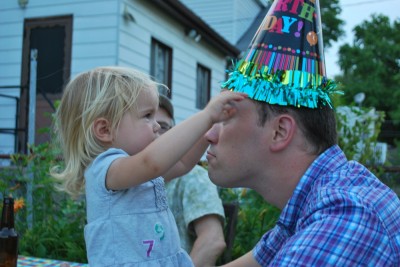
Be honest: does this look like the face of a devious individual to you?

I haven’t posted about Meg in awhile, at least, not directly.  She’s not quite two-and-a-half yet, but we’re already dealing with the wheels inside her head turning.

You know, the wheels trying to streamroll you…

Maybe a month ago, give or take, we noticed Meg starting to stall quite a bit.  Stalling before bedtime, stalling to get her clothes on to go to school, stalling to come inside, and so on.  This isn’t just a “ooooo, something shiny!” kind of distraction: this is an intentional, and deliberate attempt to slow down the inevitable.  She knows what’s coming and uses her cuteness to delay just about anything we need to do.  She’s gotten quite good at this as well, working it in so you hardly notice you’re allowing her to stall you into another song, or another story, or another cracker, or another drink of milk.

Furthermore, and more recently, she’s begun “negotiating.”  This one is a bit more rudimentary, I think, where she doesn’t really get the finer points of haggling, but you can tell she’s thinking it through.  Especially before bed, when she asks for “3 books,” specifically, knowing that “3” is more than “2,” let alone “1,” so if she asks for more, she’s more likely to get what she asks, or at least an extra book beyond the one we usually read her.  The same thing goes for songs, as we sometimes sing to (or with) her before bed.  We’ll say “one more song,” we’ll sing it, and then she’ll ask for another, specific, song.

She’s also been known to ask for “moneys for ma ewefan-t” [elephant], a mechanical bank that makes an elephant noise when you add a coin to it.  “Three moneys!,” she’ll say.  So yes, I’m already having to bribe my child.  Thankfully, at this point, she doesn’t really know the difference between a penny and a quarter…

When any of these things don’t work, however, she’s begun throwing fits, though now, it’s a little easier to stop them (to a degree…it’s never “easy”…).  Meg doesn’t cry, per se, but she definitely yells.  Loudly.  Now, I end up having to count to five and threaten a time out…and right around “four,” she stops.

So yeah, my nearly 2.5-year-old is “gaming the system.”  I guess I wasn’t expecting such things until she was at least three, if not four.

In some ways, of course, it’s nice to see this in a kid her age.  She’s learning to challenge authority, to question things, to problem solve, to “get around The System.”  At its core, it’s simple adaptation: where you learn you don’t have to simply accept what’s happening in front of you and you can attempt to change it, or at least influence it.

I guess I just didn’t expect it in a nearly 2.5-year-old.

She could teach some adults out there a thing or two about adaptation. 🙂

Review: The Dark Knight Rises

Seven years ago, Batman Begins shook up the “comic book movie” industry by reinventing the character of Batman, based largely on Frank Miller‘s interpretation from Batman: Year One.  The movie marked a dramatic shift between the mostly despised Batman and Robin (that’s the George Clooney one…), and a much darker, grittier, “realistic” version of Batman (one that doesn’t include the “Batcard“).  2008 marked the release of The Dark Knight, what many critics considered “not just a good super hero movie, but also a really good crime movie.”  This movie continued in its comic inspiration, following the story line that continued from Year One with Batman: The Long Halloween.

As you might imagine, I loved Batman Begins and The Dark Knight.  They both were far closer to the Tim Burton vision of Batman of my youth, one that wasn’t as colorful and campy as the movies had become.  These movies looked at Bruce Wayne and the Batman hero has a flawed hero, one that didn’t have super powers, yet still used knowledge and cunning to protect Gotham City.

Thankfully, unlike the earlier movies in the Batman franchise, Christopher Nolan was kept on as director for all three movies, allowing him to build a trilogy with (mostly) the same actors, the same “feel,” and increasing budget to really bring things together at the end.  And, for the most part, I think he succeeded: The Dark Knight Rises is an excellent movie.  Watching the film, you can tell that certain beats were crafted from the beginning, tying characters and scenes from the first movie back to the third one, and so on.  It shows that the same team has been making all three movies, making this franchise feel more like the Lord of the Rings Trilogy than the Star Wars or Indiana Jones trilogies (anything after those first three movies never really happened, so far as I’m concerned…).  LotR was filmed at the same time, giving it the benefit of saving money, but the added benefit of continuity throughout the three movies.  The same feel as you sit and watch.  Star Wars had different teams involved in the three movies, making each movie feel pretty different.

The Dark Knight Rises is comprised mostly of two key books from the comics: Batman: Knightfall, and The Dark Knight Returns (also by Frank Miller).  The movie opens 8 years after the events of The Dark Knight, with Bruce Wayne now a recluse, Wayne Enterprises hemorrhaging money, and cops taking charge of crime in the city, without the help of Batman.  You can tell that Bruce has had a difficult time of “letting go” of his love, Rachel Dawes, but also of being Batman: a persona he had to give up in order for the (manufactured) legacy of Harvey Dent to survive.  However, when Bane, a mercenary trained by Ra’s al Ghul (from Batman Begins) as a member of the League of Shadows, appears in Gotham City, Bruce knows he’s the only person able to defeat him.  The story navigates a roller coaster, of sorts, with Batman returning to Gotham, his exit from Gotham after Bane “breaks him” (a key moment from Knightfall), and then his “rise” again at the end.  All throughout, we see how the people of Gotham, and the police force specifically, have learned to live without Batman, while still needing his return.

Generally speaking, all the usual suspects were in the movie, and they all did well.  Christian Bale has proven he can do both Bruce Wayne and Batman (no easy task), and Morgan Freeman, Gary Oldman and Michael Caine continue to serve in their respective roles masterfully.  This time, Freeman and Caine seem to take something of a “back seat” in the movie, while Oldman steps up, being given quite a bit more to do as Commissioner Gordon.

The rest of the supporting cast, I’ve got a few gripes with, but was mostly pleased.  Firstly, Anne Hathaway did a remarkable job as Catwoman.  She evoked the same sultry “cat like” character from the 60s TV show, as portrayed by Julie Newmar, while also putting her own spin on the character.  That and she was very convincing during the action scenes.  Marion Cotillard and Joseph Gordon-Levitt also do a good job, but I questioned their overall purpose in the film up until the end of the movie.  With them, we’re also starting to add quite a few new characters onto an already large movie.  Matthew Modine‘s character was mostly superfluous, in my opinion.  He served a purpose, but in some ways, it seems like he was in the movie more than Alfred was (which should be a crime…).

Which brings us to Tom Hardy, who plays Bane.  Personally, I think he did a good job in the role, and definitely made it seem like he was a big, big guy.  Very intimidating, very dangerous.  However, we never see his face: it’s always behind the mask.  It’s very difficult to portray emotion when you’re in a situation like that, as you really only have your eyes and arms to try and evoke feeling from the audience.  It’s made even more difficult by the fact that his voice is distorted by the mask (and other effects), which makes it pretty difficult to understand him.  Brooke and I saw the movie at the Moolah, which doesn’t have the greatest sound in all of cinema, but I’m not sure how much of a difference it’ll be in other theaters.  I just think it was a poor choice to distort his voice to that degree, though I understand why they went that route.

As this is long enough, I’ll cut to the chase: the ending was good.  It was appropriate, it was what I wanted without knowing that’s what I wanted.  Everything got tied together in a satisfactory way while leaving enough threads open to give hope to fans that the franchise continues in some manner.

But it’s a clear end to an excellent trilogy.  There are few trilogies that come out like this, where you can safely say that all three movies are good ones, and this is definitely one of them.  I think The Dark Knight is still the best movie of the three, but this one’s still really good.

Meet Me At The Muny

The view of "Aladdin" from our seats.

We lived in St. Louis for 5 years and never actually went to The Muny, an amphitheater at Forest Park known for its stage productions during the summer.  Thus, for Father’s Day this year, “Meg” got us all tickets to go see “Aladdin,” a musical based on the 1992 Disney movie.

Let’s all allow “1992” to sink in for a moment…

Regardless, this was going to be the first time we’d ever tried keeping Meg up far past her bedtime.  We tested the waters a bit on the 4th of July, getting her to bed around 9:30, and that seemed to be pretty close to the limit.  Muny productions typically start at 8:15 pm (weather permitting), so we knew we wouldn’t be able to finish the whole thing, but we thought it’d be a nice family outing, and something else to test Meg’s reaction to large crowds and big events.  All told, she did a pretty great job.

"More cheese crackers, Mama?"

We ate at a Mexican restaurant before going to Forest Park to walk around a bit.  The stroller ride helped keep Meg entertained (who opted to not take a nap that day, mind you…) while we waited to go into the amphitheater.  By the time 7:45 rolled around, we were heading in, found our seats, and Brooke opened up some snacks for Meg.  The weather started out pretty hot, right around 90 F, but a front moved in north of St. Louis that dropped the temp to 80 F in about 10 min.  By the time the show started, it was surprisingly comfortable!

The show itself was “alright.”  Perhaps it’s my affection for the 1992 movie, but the changes that had to be made to the story in order to make it work on a stage weren’t the ones I’d have gone with.  The primary offender was the replacement of Abu (the monkey) with three “friends” of Aladdin, who served as narrators, to some degree, and also comic relief.  They, and the Genie, had “updated” some jokes for the 21st century, making some of the dialog a bit more topical, but many of them were less amusing for me than they intended.  By the time we left, I felt like we’d hardly even seen the character of Aladdin, and seen far more of the “friends” and of Jasmine (who did a remarkable job, sounding very much like the character from the movie).  The Genie, also, was not Robin Williams, and to me, tried a bit too hard to not differentiate himself from the example set 20 years ago.  He did alright, but again, I’m just used to the Genie I grew up with.

This production also added songs to the show.  Some of these songs, supposedly, were originally intended for the movie, but were then dropped.  A few of them, though, seemed like they didn’t fit all that well (which is maybe why they weren’t in the movie in the first place).  The musical performances were good, overall, but again, there was probably a reason some of those were dropped 20 years ago.  I could have gone with less music, personally.

Meg was getting pretty tired (and louder…), so we left at Intermission.  Appropriately, Intermission was set at the point in the story when the Genie turns Aladdin into a prince, so we got through a good chunk of the story.  Daddy got to carry Meg out, sleeping, on his shoulder, and we had her home and in bed just before 10:00.  She did a good job!

All in all, I think we all had a good time.  It was a good family outing for us, despite the late-ish starting time!

The guy in back was running really, really fast...

July Garden Update

The midwest is still going through something of a drought, and while the weather has certainly improved since having 10 consecutive days over 100 F, we still haven’t gotten much rain.

That said, the garden and chickens have mostly survived.  With regards to the garden, the peas stopped producing about a month ago.  I think we ended up with more peas than we got in Iowa last year, but not by too much.  We’ve been getting green beans for the past few weeks as well, likely getting somewhere between 10 and 12 pints-worth (Brooke has canned 8 pints thus far).  There are still more coming on, but we can already tell we won’t get anywhere near the (proportional) amount we got last year in Iowa.  Same goes for the tomatoes.  You can see in the picture above that the plants on the left are considerably smaller than those on the right.  The right-hand ones seem to be a “cherry tomato” variety, as they’re pretty small, but still taste pretty decent.  The ones on the left are the romas, the variety Brooke prefers using for canning.  Sadly, while we’ve got some on there, it sure doesn’t seem like we’ll get all that many.

Aside from beans and tomatoes, we’ve still got a good number of green peppers coming on, as well as some squash and cucumbers.  Brooke’s having to water the garden somewhat often just to keep things alive, and we’ve got a good deal of weeding to take care of sometime.  I guess, considering the weather this summer, we’re pleased with the amount of stuff we’ve gotten, but it’s still a difficult shift from last year’s bounty.

The chickens aren’t laying eggs yet, which is quite disappointing, though not terribly surprising.  Last year, the surviving chicken didn’t start laying eggs until right around now, but it’s also worth noting that chickens generally don’t like laying eggs in crazy hot weather.  I’m checking every morning to see if they’ve started laying, as the weather has cooled a little bit, but no dice yet.  Believe you me, I’m ready for some fresh eggs!

They’re nice and fat now, though, and they enjoy running around our yard.  We probably still need to clip their wings again, but aside from one (brief) escape attempt from the large, white chicken, they’ve been pretty content to stay in our yard.  The extreme heat has kept them in shady spots, though, so they tend to stay put.

Regardless, it’s a far cry from last year’s haul, but we’re making do!

Review: The Amazing Spider-man

Many have called it a bit odd that Hollywood is “rebooting” the Spider-man movie franchise already.  The first one came out only 10 years ago, the second one (and still best) in 2004, and the third one in 2007.  Personally, I didn’t detest the third one as much as some people did, though it was definitely the weakest in the trilogy, and its production difficulties and reception left a sour taste in movie-goers mouths.

Fast forward 5 short years and comic book heroes in the movies are bigger than they’ve ever been.  Marvel Studios is now owned by Disney, except for one key franchise, and that’s Spider-man, whose rights are still with Sony Pictures.  While Disney is reaping huge box office bucks for “The Avengers,” “Iron Man,” and more, Sony had a property they haven’t made money on in 5 years.  Thus, time for a re-boot.

Which brings us to this past weekend, when “The Amazing Spider-man” launched here in North America.  This movie portrays Peter Parker’s transformation into Spider-man yet again, telling essentially the same first-half of the original movie this time around with a different Peter Parker (Andrew Garfield) and a different Mary Jane…er…now Gwen Stacey (Emma Stone)…  While the first half of the original movie took place largely while Peter was in high school, and then moved on to college life, the most recent iteration sticks with high school for the entire movie and deals more with Peter’s life at that stage, rather than the “coming of age” that was already done.  Garfield and Stone do pretty great jobs in their portrayal of each character, especially Stone (who’s good in just about everything, it seems…).  They don’t quite pull off “high school love” (as Garfield is 28 and Stone is 23), but they’ve got enough chemistry to make it work.

The effects were also pretty great.  The CGI work on an animated Spider-man character has come a long way in 10 years and, while it was pretty easy to see the stunted motion in the original movies, this Spider-man moves much more fluidly, and much more like you’d expect from the comics.  There are more acrobatics to this Spider-man character, which makes the action scenes that much more interesting to watch.  Garfield also brings quite a bit more “believable wit” to the character.  I was always drawn to the comic book character because of his sarcasm and dry humor, and this aspect of the character comes through far better in this movie (from Garfield) than it ever did in the previous flicks (from Tobey Maguire).

I guess my main gripe with this movie is that much of it seems largely unnecessary.  We go through the origin story again, and it takes about 45 min of a 2 hr movie.  One reason why “Spider-man 2” is so much better than “Spider-man 1” is that the origin story was all taken care of by the first movie.  The entire story could be fully developed over the length of the film.  This is why “X-men 2” is better than “X-men,” and why “The Dark Knight” is better than “Batman Begins.”  The origin story needs to be told, sure, but for a franchise that’s only 10 years old, it’s a good bet that they could have summarized everything at the very beginning and moved on.  Tim Burton’s “Batman” didn’t need an origin story, except in flashbacks, because it was so well-known…and that was friggin’ 1989!

And that brings me to my second point: they could have done more with Dr. Connors/The Lizard.  Rhys Ifans was alright in the role, but I really don’t think he was given much to do. In the comics, the character of Kurt Connors was a brilliant scientist and mentor to Peter Parker.  The man had a family and a great career.  He is missing an arm and, through his research, he looks to regrow that arm by studying how lizards regrow their limbs.  He’s a deep character that unwittingly transforms himself into a creature that can’t be controlled (kinda like the Hulk).  However, that entire relationship is blown over in favor of the origin story for Spider-man that we’ve already seen 10 short years ago.  Another reason why “Spider-man 2” worked so well is that there was a seemingly genuine relationship between Peter Parker and Dr. Octavius, who later becomes Dr. Octopus.  There is mutual respect between the two characters.  It’s a developed relationship.  Personally, I just didn’t see the same thing between this iteration of Peter Parker and Dr. Connors, and it’s to the movie’s detriment.

So, for these reasons, I still think “Spider-man 2” is the better movie in the franchise.  “The Amazing Spider-man” is definitely better than “Spider-man 3,” but it’s admittedly a low bar to hurdle.

I haven’t decided whether this movie is better than “Spider-man,” though.  They both have a different focus, so they’re telling different stories.  I also appreciate that this movie (and likely trilogy) delves further into the disappearance of Peter’s parents, something the original trilogy never dealt with.  So, in the end, we probably can’t compare them until we have complete trilogies to put side-by-side.

For now, though, “The Amazing Spider-man” is a good movie.  If you like the franchise, you probably won’t be too disappointed.  But it probably won’t blow your mind.

Review: Prometheus

I came to the “Alien” franchise somewhat late.  It was certainly popular when I was in my pre-teen years, and other kids I knew had seen them, but I don’t think I even saw the first movie until college.  I certainly remember the toy blitz when they released “Alien 3,” thinking they were pretty cool, though in retrospect, “Alien 3” was likely the worst movie in the franchise.  Fox even tried rebooting the series, to some degree, by mixing the Alien and Predator franchises together, something that began as a comic and eventually turned into a few not-so-good movies.

Thus, I think it’s safe to say that the best movies in the franchise are 1979’s “Alien,” directed by Ridley Scott, and 1986’s “Aliens,” directed by James Cameron.  It could be argued that the reason these two movies worked so well is that they’re very different takes on the same idea: a far-future where humans in dirty old space ships come across an alien species with human and insect qualities that wants to kill them…and that, for the most part, androids aren’t to be trusted.  Scott portrayed a single alien on a ship inhabited by various folks, including one young Sigourney Weaver, but set it up in the same vein as a “slasher” movie.  “Alien” was more of a horror movie.  “Aliens,” on the other hand, under the direction of Cameron, saw Weaver and a group of future marines do battle with a whole group of aliens in a human colony.  “Aliens” was more of an action movie.

Which brings us to “Prometheus,” a film connected to the “Alien” franchise, but very, very distinct.  Ridley Scott hasn’t directed a science fiction movie since “Blade Runner” in 1982, so everyone was intrigued to see what he would do with 30 years worth of new tools.  He didn’t disappoint.  The tech portrayed, from the virtual displays to the ship, to the alien creatures, etc. all seem to fit seamlessly into the environment.  We saw it in IMAX 3D and, while the effects were very apparent, they were very complimentary to the overall experience, rather than distracting.  You can tell Scott utilized these new tools to great effect.

The story, however, is kinda confusing.  To be honest, I don’t know what to make of it.  There’s something to be said for leaving a movie with additional questions (something the writers have said were purposeful, in the event they’d get a sequel), but some of the plot holes are so large, it seems like there isn’t much of a way to dig out of them.

As I said earlier, “Prometheus” is very different from the “Alien” franchise.  It takes place in the same universe, involves some of the same players (namely the Weyland Corporation), and generally feels like they’re related.  At the same time, though, “Prometheus” is more concerned with an existential search for our creator, the alien species (referred to as “The Engineers”) that seeded Earth with DNA that would eventually evolve into modern humans (and don’t get me started on the scientific missteps this brings up…).  “Prometheus” takes a look at that search, the powers that seek to control that knowledge, and our overall sense of humanity – arguably, things the “Alien” franchise hasn’t done before.

Generally speaking, I liked it.  I don’t think it’s absolutely necessary to see it in 3D, but if you want to, you won’t be disappointed.  There are definite, and obvious, callbacks to the “Alien” franchise, so fans of the series should be pleased.  It is definitely more along the horror line of things, rather than action, so be sure you can handle a few cringe-worthy scenes.

But that plot.  I just don’t know what to make of it.  I think I want a sequel, just so I can see where they’re going with it.  Then again, maybe I don’t want a sequel, so these questions are left up in the air for fans to ponder for another 30 years.

A Brief Reflection on Turning 30

I remember when my Mom turned 30.  Kristen and I were out playing in the back yard and we saw all our aunts, uncles and cousins from the Plochberger side of the family driving up and quietly moving toward the house to surprise her.  Infamously, Kristen, not understanding what was going on, rushed to head inside to tell Mom that everyone had showed up.  I had to stop her before getting inside and, as she was 4 at the time, it wasn’t too hard for me to catch her.  The Plochberger side of the family has traditionally been very good at donning black clothes, putting up signs saying “Over The Hill,” and making a remarkably big deal of family members turning 30, largely under my late Aunt Sara’s guidance.

Now, it’s 23 years later and it’s my turn.  Now that I think about it, we haven’t had a 30th birthday in the family for quite awhile (Mom was the youngest in the family with brothers and sisters far into high school at the time she was born, so we had cousins turning 30 before I was even 10) and, as I live in St. Louis and they all live a few hours away, we won’t be celebrating like that.  Heck, practically no one I know celebrates 30 anymore like that, as people live to be much older now and 30 is almost like any other birthday.  Even 40, to some degree, is a non-issue.

It seems like, in the past 20 years, 30 became the new 50.

Makes me wonder, in another 20 years, if 50 will be the new 70…before I even get there…

In any case, it will be weird to say that I’m in my 30s, but in the end, I don’t see it as a huge shift.  There was obviously a time that I did, but now that I’m here, it doesn’t really mean much.  The only thing that sticks out in my mind is the fact that I’m now 30 and am still, technically, “in training” for my career, though this is commonplace in the field and to be expected.  It’s also a bit different in that I remember my Mom’s 30th birthday (and so does Kristen), but Meg won’t remember mine.  Again, a sign of the times when the average age of getting married and having kids is getting later and later.

Other than that, it’s just another year with two new digits to write, rather than just one.  And that’s fine by me!

It is rather disappointing to have this day fall in the middle of the week, though, as it makes celebrating a bit more difficult.  Brooke, Meg and I will go to the Bottleworks tonight, methinks, which is always a good time, so far as I’m concerned.  This past weekend, my family came to town to help celebrate (that, and Father’s Day, of course), and that was a great time.  In the end, it’s still more fun than last year, as we’re closer to friends and family here in St. Louis, and it’s a birthday that feels at least a little more meaningful than 29.

Regardless, I’m ready to hit this particular milestone.  At the very least, I don’t have to say I’m in my 20s anymore and can try to act like an adult.  😉

1982: The Year That Was

As I was born in 1982, I don’t remember anything about it.  Thus, I thought it prudent to see what else happened that year, aside from my birth.  Apparently, quite a few things went down, as Wikipedia is helpful in pointing out.  The Wikipedia post mostly involves world events, if you’re curious, but I picked out a few of the more interesting ones to highlight here.  At least, more interesting to my generation.

A few interesting tidbits about 1982:

  • Average cost of a gallon of gas: $0.91
  • Price of a US Postage Stamp: $0.20
  • Average Price of a New Car: $7,983.00
  • Average Price of a New House: $82,200

Here’s a list of stuff that happened in 1982: